
Science Knocks at the Brain’s Final Door
The blood-brain barrier, a structure that protects the brain from potentially harmful substances, also makes it difficult for drugs to reach it. Three research projects supported by the “la Caixa” Foundation are exploring solutions to treat neurological conditions, which, according to the World Health Organization (WHO), are the leading cause of disability worldwide.
The body’s most important organ is well protected—a major advantage that also presents a drawback. It prevents viruses, bacteria and toxic substances from entering, but it also blocks most treatments. The blood-brain barrier, a cellular structure that precisely controls access to the brain, is responsible for this protection.
The difficulty of getting drugs across this barrier has far-reaching consequences. According to the World Health Organization (WHO), neurological conditions are the leading cause of ill health and disability worldwide, ahead of cancer and cardiovascular diseases. More than three billion people are affected, representing over 40% of the global population, according to 2024 data.
Researchers are seeking a balance: enabling treatments to enter the brain without compromising its natural protection. With this aim, three projects supported by the “la Caixa” Foundation are pursuing different strategies to facilitate this process, ranging from microscopic drug delivery systems to devices capable of reproducing human structures.
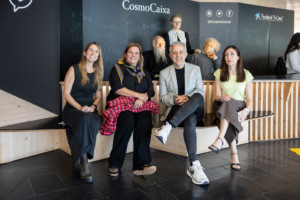
At the CosmoCaixa Science Museum in Barcelona, the researchers leading these projects explain the progress achieved so far. Although the projects are at different stages of maturity—some in their early phases and others more advanced, having even led to the creation of a company—all remain under development as they work towards clinical application.
Crossing the Brain’s Narrow Capillaries
The brain’s protective barrier became one of modern medicine’s greatest headaches—quite literally—when, in the late 19th century, Paul Ehrlich injected a dye into mice to observe how it spread throughout the body. The bacteriologist and Nobel Prize winner in Medicine encountered an unexpected result: not all organs were stained. Neither the brain nor the spinal cord had taken up the dye.
He discovered that this was because the brain’s capillaries are sealed by very tight junctions between their cells—unlike in other tissues—making it difficult for molecules to pass through.
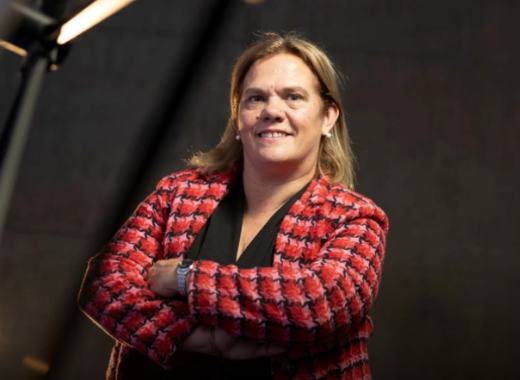
The blood-brain barrier prevents 98% of drugs from reaching the brain, explains Meritxell Teixidó, chemist and CEO of Gate2Brain. Her company was founded with the aim of developing technologies capable of overcoming this biological barrier and improving the treatment of neurological diseases.
To achieve this, the company works with peptides, very small proteins found naturally in the body that perform a variety of functions (one example is oxytocin, the hormone that helps induce labour). They can also be designed in the laboratory to perform specific tasks—in this case, crossing the blood-brain barrier.
“They are a kind of smart key that carries the drug with it and delivers it to the brain.”
Massimiliano Minocri / EL PAÍS
On their own, these peptides do not treat a disease; instead, they transport other therapeutic molecules. In Gate2Brain’s current project, the peptide carries a chemotherapy molecule, but the same technology could be used to transport other treatments, such as antibodies for neurodegenerative diseases or drugs that cannot enter the brain on their own.
The company’s first objective was to tackle Diffuse Intrinsic Pontine Glioma (DIPG), one of the most aggressive pediatric brain tumors, for which there is currently no cure.
“It has an enormous clinical impact, and the blood-brain barrier is even more robust in children. If our research worked in these cases, the technology would be strongly validated,” she explains.
For now, the project is in the regulatory preclinical stage (the next step is a clinical trial). Furthermore, these molecular transporters can also carry antibodies, proteins and nanoparticles.
“We want to be a tool that helps other therapies reach the brain more effectively,” she summarizes.
The project originated from research conducted at the University of Barcelona, IRB Barcelona and Sant Joan de Déu Hospital, leading to the creation of Gate2Brain in 2020, following 15 years of research and 10 doctoral theses.
“We have grown gradually, always with the vision of developing a technology that would be accessible and applicable more broadly,” she emphasizes, referring to a company with around 15 professionals.
She explains that the most difficult transition was understanding that research does not end when it leaves the university, but continues with different objectives and constraints.
“Today, we are in the regulatory preclinical stage, with the dream of reaching clinical trials,” she adds.
Original article: La ciencia llama a la última puerta del cerebro
Source: EL PAÍS | November 11, 2026
Author: C. V. / EL PAÍS
Photography: Massimiliano Minocri / EL PAÍS
English translation of an excerpt from the original article.
To read the full article, including the other research projects featured, visit EL PAÍS (in Spanish):